Near-Death Experience Then Rebirth at 25

Updated: Jun 16
Relearn Breathing, Movement, and Reality of Recovery
Ten years ago this month, I felt born again. I nearly died and came back. Here is what happened that month and how it changed how I see my body, risk, and time. I end where I am now, with what from that month still follows me.

If You Only Read 60 Seconds
At age 25, a routine health check found a hole in my heart that I had since birth.
Doctors called the fix low risk. A complication forced emergency open-heart surgery.
I woke in the ICU unable to speak or move normally. I relearned breathing, movement, and walking.
My girlfriend, Sindhu (now my wife), took the first flight she could from San Francisco to Mumbai. She anchored me through the hardest days.
The experience changed how I think about risk, surgery, physical optimization, and what matters.
The Health Check Before I Left for the US
While working in Bangalore, I had accepted an offer to go for my MBA at UCLA Anderson School of Management in California.

I knew the US healthcare system had its own challenges. Before I left, I wanted a full health check in India. I booked the most comprehensive check I could find in Bangalore.
The doctor said I had a hole in my heart. "Do not worry," he said. "This is the most common type, and it is very easy to fix. You will go to the hospital one day and be back to work the next day."
The diagnosis scared me. The reassurance that the defect was common still amused me. For years I had wanted to be unique. Part of me asked, "Why don't I have more unique situations rather than common ones?" I did not want to be common. I wanted to stand out.
At the time I treated my body like a system I could tune. I had lifted weights for 7 years. I imagined closing the hole might make me stronger. Maybe I could lift heavier. Maybe I could become a better version of myself.
The fix felt like replacing one weak part in a machine. I got second opinions from a few doctors in Mumbai, where my parents lived. Then I flew there for the procedure.
ASD and Why I Chose Closure
I had an atrial septal defect (ASD), a congenital hole between the chambers of my heart. I was born with it.
Doctors usually catch ASD in childhood or in adulthood. The hole lets oxygen-rich and oxygen-poor blood mix. Blood flow to the lungs can rise. Over time the heart works harder to move oxygenated blood through the body. Breathing can start to feel harder.
Children often show symptoms early, so the defect gets found then. Other people learn they have ASD decades later.
I was 25, fit, and healthy. My diagnosis landed in the unusual middle.
Any procedure on my heart scared me. I still chose transcatheter closure because I believed sealing the hole would improve my body. The doctor called the procedure low risk, which made the choice feel manageable. Transcatheter closure also sounded less invasive than open surgery.
The Planned Procedure and One Risk
The plan was to enter through the femoral vein in my leg, thread a catheter to my heart, and place a septal occluder across the hole. The device has two discs that expand on either side of the septum to seal the defect.
The team raised one concern. Tissue on one rim around the defect was thin. Device closure works best when rim support runs all around the hole. I had solid support on three sides and weak support on the fourth. The doctors still believed closure was feasible in my anatomy. They did not expect the thin rim to add much risk.
The clinical plan felt steady enough to proceed. What kept shifting was how much downtime each conversation implied.
Recovery Estimates Kept Changing
At diagnosis, doctors told me I would need only that day off. At the next specialist visit, the estimate became one day. When I checked into the hospital, the doctor said recovery would take two or three days, then a few more days of work from home.
Each update irritated me. The recovery timeline kept stretching. To the doctors, one day and ten days of a patient's time seemed interchangeable. To me, every extra day disrupted my rhythm as I prepared for business school.
Sindhu's Planned Visit to India
Sindhu, my girlfriend then and my wife now, lived in San Francisco. I had proposed to her virtually a few weeks earlier. Later that month she would fly to India for a small engagement gathering with both families.
I asked her not to come for the catheter procedure. The doctors called it low risk, and I expected a short hospital stay. I would be in the hospital or at home recovering. I wanted her trip to center on engagement, when I could actually spend time with her.
First Wake-Up After Check-In
I checked in at a hospital in Mumbai, went under anesthesia, and went through the procedure, as planned.
When I woke up, I was in a different room. I wondered where I was. ICU? Ward? I had never been in either before. It was the post-operative ward. I was almost disappointed. I had pictured the simple procedure ending in the ICU, as if that were the peak of the hospital story I would get to tell. I had heard many hospital stories, but I had never seen that world from inside.
I sat in bed and listened to patients complain to nurses about all kinds of problems. I remember bedside chatter about oxygen and gas supply, patients asking someone to bring the next cylinder because the current one felt empty, that kind of ward logistics.
Then I suddenly felt very sleepy. I treated the sleepiness as a minor symptom. After the procedure and medication, sleep felt normal. A nurse told me to call her anytime I felt anything unusual. I nodded, but the unease did not go away.
Emergency Surgery That Same Day
Later that afternoon, the wrongness got harder to brush off. I had been uneasy for a while. I told the nurse I was unwell.
The next thing I remember is waking to the room filled with doctors. I saw relief on their faces when they realized I was awake. That reaction surprised me. Something serious had happened. The medical team told me I needed surgery.
Another Family Gave Up the Operating Theatre
But, there was no open spot in the operating theatre. The theatre was already booked for a senior citizen on his third attempt at the same procedure. Doctors had stopped his first two surgeries because of complications. The patient was already completely prepped and was unconscious under anesthesia.
My father requested the other family to give up the slot. They were understandably reluctant. The senior citizen had already been sent back twice without the operation because of complications on earlier attempts. The family had come from another city to Mumbai for this surgery. They were staying in the ward between attempts, paying for each night, and every delay added cost. They had lost time. They wanted the slot that day, as he seemed stable for this operation. But my father pleaded. If their father missed today, he could try again the next day. For me, he said, this might be the only window. The family agreed to take him back to the ward and try again the next day so I could use the theatre.
In the Operating Room
The medical team wheeled me to the operating room. There, they told me they would remove the hair on my chest and asked me to breathe through a mask.
I was still hallucinating from everything I had seen and heard in the ward, including those cylinder and gas supply complaints. I told the doctors I thought the anesthesia setup was not connected. I said I could only smell rubber. I insisted they check the system. I even said I had heard the oxygen tanks were not connected.
In that confused state, I started slipping under again. I felt exhausted by pain. I thought about letting go of life.
The world around me went black, then white. Everything felt cloudy and far away.
Through that haze, I sensed two directions.
One direction felt peaceful. I could just walk toward it and be at peace forever.
The other direction had Sindhu. I could walk toward her and be with her.
I chose Sindhu. That choice pulled me back from giving up.
What Happened Outside My Room
I was slipping in and out. I did not track most of what happened in the hallway. This is the sequence my family filled in for me later.
My parents sat right outside the operating theatre during the planned procedure. When staff wheeled me out, I was unconscious from anesthesia, but the procedure had gone as planned. They were relieved. My father went back to work for the rest of the day. My mother stayed at the hospital.
That afternoon my mother came up to the ward. I still seemed fine to her. Later, as the crisis built around my bed, she came up again. Doctors crowded the room. Staff would not let her reach my bed. She was turned away. From the hallway she could see my bed and the medical team around me.
A doctor spoke with her. He gave no medical detail. He told her to arrange a large sum in cash, immediately, so I could be operated on. She was shocked by that request while still trying to understand what had changed. My father left work at once and drove to the hospital.
My parents arranged the cash, and the hospital went ahead with the operation. They were still afraid of losing their 25-year-old. While they waited, they reached out to every doctor they knew through friends and family, across cities and disciplines. The hospital still would not give them a clear clinical picture.
My younger brother was studying in Mumbai. He had come to the hospital for a regular visit. While staff handled the emergency upstairs, they held him downstairs and would not let him come up to my bedside. He left without seeing me, aware that something was going wrong.
After the open-heart surgery, the head of the medical team came out to my parents. He said the operation had gone well and that I was fine. He also joked that they had opened my chest and could not see anyone inside, so it did not look like I had room in my heart for my parents or for Sindhu.
My parents clung to the relief. For years afterward, my parents and I kept repeating that joke. It was never funny. It just became one of the phrases we used when we wanted to point at that day without going back into it.
Sindhu in San Francisco That Night
Sindhu told me later what happened on her side.
I had no access to a phone. She was facing silence. She texted my brother for an update.
He relayed what he had just been through at the hospital: he had not been able to meet me, and something serious was underway. He also said I might be in for a longer stay than planned. That sent her into panic.
Sindhu and my mother spoke on the phone. My mother tried to tell Sindhu to stay strong and not cry, while explaining my situation. Sindhu started crying. Hearing her, my mother did too.
She called her own mother. She was too upset to get coherent words out. Her mother could not make sense of it and reached Surya, Sindhu's elder brother, in Mumbai.
Earlier updates to Sindhu's family had sounded reassuring. This turn confused Surya. He called my father, insisted he needed to be near the hospital, and stood outside even past visiting hours. For Sindhu, his showing up that night mattered. It was how she felt she was represented next to my family in my crisis.
The ICU Night I Could Not Speak
When I came back to my senses, it was the middle of the night in the ICU. It was nothing like what I had imagined that morning in the post-operative ward.
I had no wristwatch and no spectacles. The room was dim, with few people around. Several tubes came out of my torso to drain accumulated fluid. I had a catheter, IV drips, a feeding tube, and a breathing tube. More tubes ran through my chest, stomach, and face. I could not speak. I could not move my head. I felt almost vegetative.
Nurses were nearby. I could move only my fingers, and barely move one hand. I tried to communicate with improvised signs, but communication was hard.
I asked for a pen and paper, and they brought them. I wrote one request, and they took the pen and paper away while they got what I asked for. That frustrated me because writing was my only way to communicate. I asked again and got them back, but I still had no table.
I was lying flat on my back. I could not see my fingers, and I could not see the paper either. I had to write blind and hope my words were readable.
I also managed to ask for a pillow under my head because my head or neck hurt.
They brought a pillow and asked me to lift my head, but I could not move it at all. I had lost muscle control. I moved my forearm a little, grabbed my hair, and pulled my head up so they could slide the pillow under it. After that, my head felt better.
I think I then asked the time and day. I had lost my connection to reality, and I was trying to understand where I was.
Losing Track of Time in the ICU
By morning, I noticed a strange pattern that continued for the next one or two days. Every time I guessed the time, I was one hour ahead. If I thought it was 4 a.m., it was 3 a.m. If I thought it was 5 a.m., it was 4 a.m.
What Went Wrong in the Second Surgery
The doctors came. I spoke to them as politely as I could, which seemed to surprise them. Then they explained what had happened.
The chief doctor had earlier operated on the Prime Minister of India, and he operated on me too.
He, or someone on the team, explained that the device placed in my heart was supposed to expand only enough to plug the hole. Instead, it kept expanding. The metal device punctured my aorta, the artery that sends blood from the heart to the rest of the body. Blood from the heart’s main outflow was leaking inside my chest.
I developed major internal bleeding and severe breathing compromise. Fluid and blood buildup affected my lungs. I lost a lot of blood. My father had to arrange a lot of blood for me.
The team had to perform emergency open-heart surgery. They opened my breastbone, held it open with metal clamps, and stitched closed two openings in my heart: the original ASD defect and the new tear from the complication. Then they closed my breastbone with metal wires.
They told me my heart itself was in perfect condition even a few minutes after surgery. The part that would take time to heal was the surgical opening of my body.
I was still in that tangle of tubes.
That was when I realized I would need to relearn breathing, movement, and walking. My chest muscles, which had grown strong from weight lifting and martial arts, now flopped around. I felt different. And weak.
First Morning in the ICU
That morning, the nurse fed me breakfast.
A large plate arrived. I remember taking many spoonfuls, but I had eaten less than 10% of it. My sense of time and scale was so blurred that I did not realize how tiny each spoonful was or how long each bite took.
I also felt an urge to use the toilet after being asleep for so long. The nurses told me I had a urinary catheter, so I did not need to urinate, and my bowels had already been emptied, so there was no bowel movement to pass. Still, my morning habit felt so automatic that I kept trying. I was being a creature of habit. The actions to have a bowel movement felt so medical - I had to get out of bed and sit on a chair with a pan underneath.
When Sindhu Arrived
The plan Sindhu and I had made before check-in did not hold.
It was early morning in California. After her call with my mom, when she realized the extent of the issue, she was crying a lot, which made her roommate think Sindhu and I had fought and that the fight had upset Sindhu. But after hearing the story, she pushed Sindhu to stop waiting on news and try to go to India. At work Sindhu was in no shape to focus, but she had to go to work to get immigration paperwork signed by her manager so she could fly back to the US after the India trip. Her friend Deepa helped her pack. She flew out on the first flight the next morning.
I was still in the ICU. I struggled to speak and move. When my family told me she was coming, I felt relieved. The hours until she landed dragged. I pestered the ICU staff to check the time every few minutes.
On the other side of the city, Sindhu paced Surya's apartment. Her family told her not to rush to the hospital. They wanted her to act prim and proper and arrive at the right time.
She reached the hospital while I was still in the ICU, before I moved to the ward. Once we started talking, I laughed a lot. She joked that I had gone through all of this just to see her sooner. I asked her to stop making me laugh because every laugh sent pain through my whole body.

The Ward Bed and the Sahara Dream
When I moved from the ICU to the ward, I was in a different bed with an adjustable backrest. I still had to stay on my back.
Flat was uncomfortable. Fully upright was also uncomfortable. I asked my parents and Sindhu to move the bed a little up, then a little down, until we found the best angle. Even in severe pain, my reflex was to optimize. Test 30 degrees, then 40, then one step better.
That first night, I had a hallucination. My bed sat inside closed hospital curtains. I lay on my back at one fixed angle, with pain in different parts of my body. The heat was suffocating. I felt as if my bed was floating in the middle of the Sahara, with no one around me. Everywhere I looked, I saw yellow desert.
Visitors in the Ward
Many family members came to see me in the days that followed. Uncles and aunts kept arriving. Someone would point to the young woman by my bedside and ask who she was. It was the first time my mom had to decide how to introduce Sindhu. Each time, she picked a label from a short list: friend, girlfriend, fiancée, classmate. She usually said friend.
It did not feel like girlfriend was the right word for extended family while I was in the hospital, especially to uncles and aunts in an Indian extended family. She was not a fiancée yet because my engagement was a few weeks later. So my mother often chose friend.
Sindhu sat in the hospital every day, all day. Yet, to most relatives she was just a friend. I can imagine it might have stung.
My father's cousin was a doctor and a close relative. One of my best friends, Akhila, was a medical professional at another hospital. They came when they could in the days that followed. When either of them was at the hospital, doctors and nurses often explained my situation in clearer terms than they had given my parents. The team seemed more willing to speak with another clinician. My father's cousin passed on enough detail that my family could calm down. Akhila could then speak with us as a friend and confidant. I remain grateful for her visits through the hospital stretch and afterward.
Walking the Hospital Corridor
With support from a physiotherapist, I started walking slowly in the hospital corridor to rebuild strength. That was my first exercise: slow walking.
I was probably the youngest patient there. Most other surgery patients were senior citizens. People were curious about my story. They usually asked Sindhu or the physiotherapist why I was there and what had happened. My family still remembers the curiosity around me.
One Support Person at a Time
My mom and Sindhu were both at the hospital to take care of me and they spent long stretches together. They shared lunches in the cafeteria, picked up each other's food preferences, and grew closer.
But while I was in the ward, hospital rules let only one support person stay at my bedside throughout most of the day. During visiting hours I could sometimes have two or three.
My mom had nearly lost her 25-year-old son and now had him back. She wanted to nurse me back to health and often hoped she would be at my side. I wanted Sindhu. After years of long distance, her company was lighter and more fun when I was already in pain.
They had to figure out who came up to my room while the other waited in the lobby. That was awkward for both of them in a way it had not been before.
It also felt like the first time I had to choose openly between the two most important women in my life, my mom and my partner.
Eleven Days and Appetite Coming Back
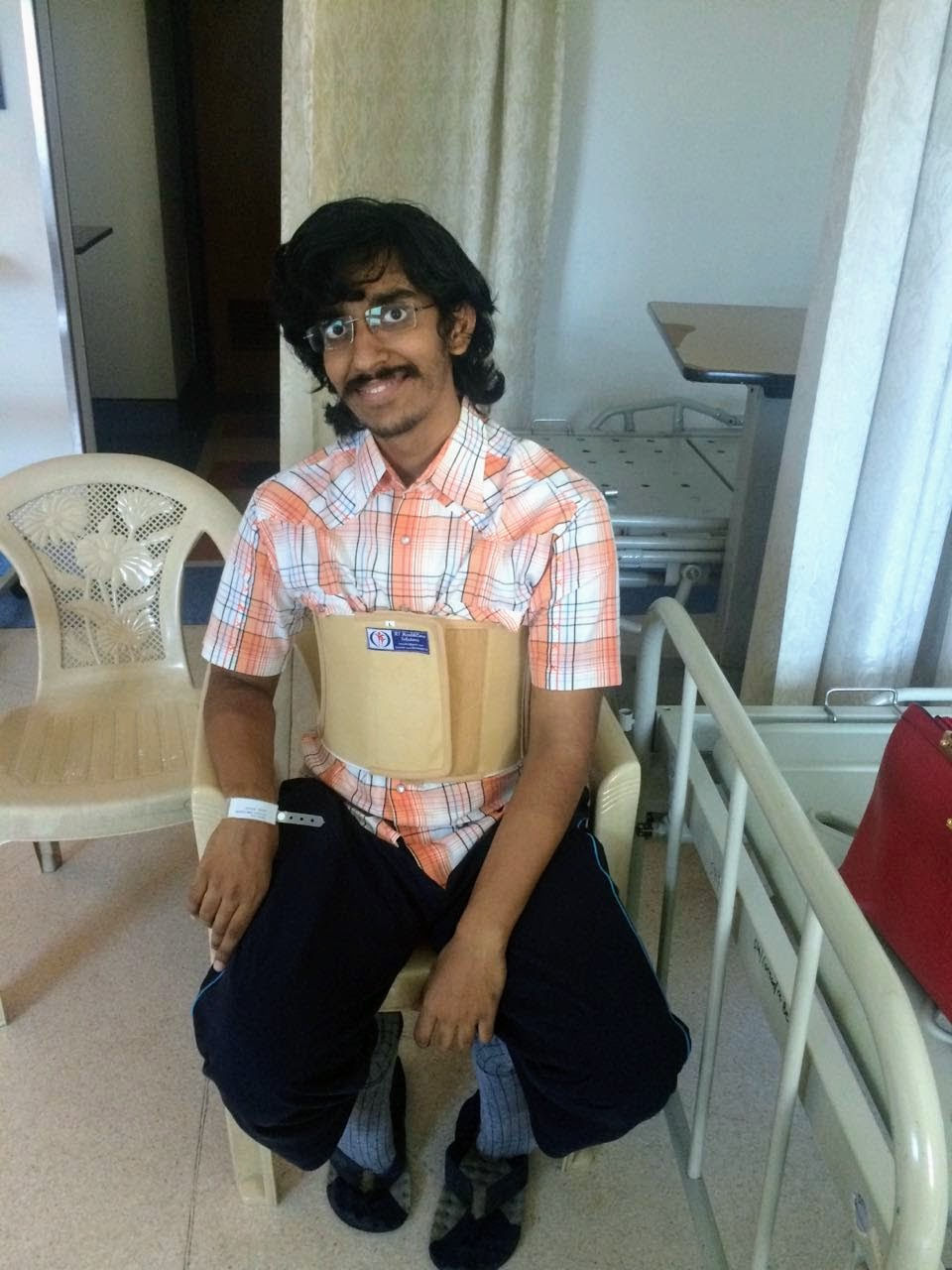
I stayed in the hospital for 11 days. Even within those first days, I saw a clear shift. Within a few days I went from barely finishing a plate to almost two full thalis.
The Spirometer and Deep Breaths
Fluid in my lungs made breathing shallow and uncomfortable. The care team told me to take deep breaths and exhale fully so my lungs could expand again. I used a spirometer, and the numbers gave me something concrete to track. I kept trying to push those numbers up.
The effort was not always easy. My mental state affected each session. On better days, I could push harder. On rough days, even one round felt heavy.
In the hospital, the nurses and physiotherapist used a trainer routine on me. One more round, keep going, try again. In that room, with them, it worked. It kept me moving when I wanted to stop.
After we got home, my mom tried the same script in the same tone. The lines belonged to the ward, not to the person who had raised me and worried over me. Coach talk from her sounded so off that I laughed.
She was only trying to help me heal. The laugh was not aimed at her. It still landed wrong. I could see that it stung.
I still remember that moment.
After Discharge: What Normal Meant
At discharge, I met another doctor to discuss fitness and diet.
I kept asking when I could get back to normal. He said I was normal now. I pushed back: did normal mean I could lift 200 kilos again, like before? The answer was no.
That gap frustrated me. I wanted advice that matched my definition of normal, not a generic one. Eventually he gave me a clear progression: a ten-minute walk on day one, fifteen minutes on day two, twenty on day three, then gradual increases while I monitored my heart rate.
That plan was why I bought my first Garmin heart-rate smartwatch.
The same doctor advised iron-rich foods because I had lost a lot of blood. He suggested several meat options, and I agreed immediately.
Then he noticed my mom's expression and understood our background. We came from a vegetarian household. I had been born and brought up that way. Until then, I only ate meat outside the house. My parents still wanted the best for me in recovery, so they agreed to meat at home. I started there. Having meat in our kitchen was new for all of us.
Sindhu at Home
In the ward, hospital rules had already forced a daily choice between my mom at the bedside and Sindhu in the lobby, and at home my mother drew a different line between who ran the house and who took care of me.
After my discharge from the hospital, Sindhu commuted for a few hours daily to come to our home to spend a few hours with me while I recovered. I had little energy and strict movement limits. Still, I looked forward to those visits from the time I woke up each morning. They broke up a month that otherwise felt like I had missed preparing well for business school.
Once or twice, when she was already at our home, she went into the kitchen to help my mother. In our house, that is what guests often do. My mother would gently send her back out. She said she could handle the house. Sindhu could take care of me. Sindhu told me later that those words stayed with her. They still do with me.
Engagement Despite the Surgery
My parents worried whether it was fair to ask for Sindhu's hand while I had a serious, life-threatening medical condition. Sindhu's parents had a different worry. They were not sure the engagement was still on during my recovery, but they felt awkward raising it, because that might make us think they wanted to call it off. Sindhu explained later that they were stuck in that silence. On the relationship itself, she and her parents were clear: we already loved each other, and this could just as easily have happened after marriage. I felt grateful for that.
We still had to decide whether to hold the engagement ceremony or spend the month only recovering. I wanted some return to normal life, and I wanted to make our relationship official while she was in India from California. So we went ahead with a small ceremony that same month.
Recovery made everything difficult. My parents had to help with everyday care I had never needed from them as an adult, including bathing. I had strict movement limits and could not bend, so I could not get a haircut. My hair looked wild in the photos.

I also stayed home to avoid infection and exertion. I could not shop for an engagement ring or clothes. I wore my dad's 26-year-old wedding suit, and it hung loose on me because I had lost muscle and weight during the hospital ordeal.

I could not kneel, so Sindhu knelt for our engagement photos and offered me flowers. Even the photographer was surprised. We had hired him, but we refused to leave our building for a scenic location. We took every photo in the small lift lobby of our high-rise apartment.

Even with all those limits, we still went through with the engagement. I still cherish it as a return to celebration, not only to routine.

Business School and the Surgery
After surgery, doctors told me to avoid high-intensity activity and roller coasters for about six weeks. That period overlapped with my first flight from India to the US and the start of business school.
Sindhu recommended I fly business class and request wheelchair assistance. I was not supposed to lift bags or raise weight above shoulder level, so her advice was practical. I still felt like I was undeserved royalty.
At business school, I had to tell classmates and event organizers that I could not join some early bonding activities. I often had to sit out, and I felt the loss of those moments.
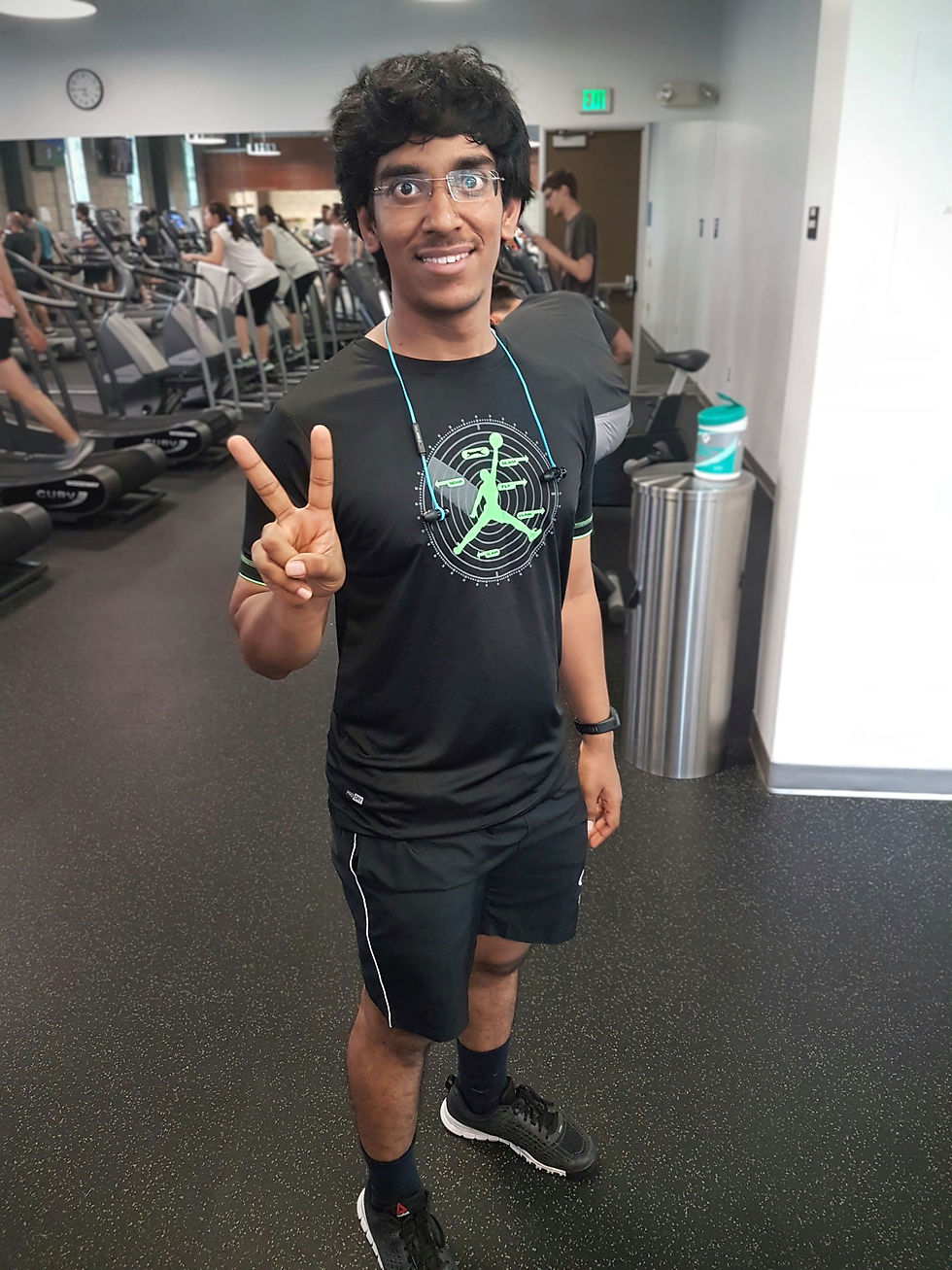
Six months later, I was finally cleared to lift weights again. I still remember my first day back at the UCLA gym.
MBA Essays and a Closed Window
If the surgery had landed a few months or a year earlier, it could have anchored my business school application essays. I had read essay after essay where the candidate survived a hardship, stated a lesson, and stood out. I used to feel I lacked a life-altering episode worth telling. That reversal stung: I finally had the episode, but the admissions window had closed. I caught myself imagining a higher-ranked school, then noticed how narrow that frame was. What stung next was the wish itself: using the surgery as application material.
A Higher Bar for Surgery
My bar for what counts as meaningful went up. I found it easier to sit with the certainty of death. Later, Four Thousand Weeks: Time Management for Mortals sharpened that mood. Outlive: The Science & Art of Longevity pulled in the opposite direction, and both reads still sit in tension.
Surgery itself moved down my list of default fixes. I now push back on surgery for myself or my family unless all three apply:
Symptoms are present.
Non-surgical options cannot control those symptoms.
Daily life with those symptoms is unacceptable.
The human body is not hardware we optimize. It is biology, and biology runs on trade-offs. That was a real change from how I went into surgery, when I had treated the hole like a weak part in a machine I could upgrade. Every surgery and every medical intervention carries side effects. Preventive care helps until it stops helping. I would rather live with cosmetic limits or performance drag than operate early and trade one problem for another. LASIK is the example I know from the inside: I have wanted it for close to twenty years and I still have not gone for it.
What people told me about their own recoveries used to wash past me. Now it registers. They often describe partial recoveries after joint replacement, ACL repair, or other tendon work from sports injuries. The joint rarely returns to a pre-injury baseline. Re-injury stays likely.
People carry many small defects. Most people live with most of theirs for most of a life.
Ten Years Later
Ten years later, I still carry that month in detail. I am grateful to be alive. That sentence also feels thin on most days, because I still complain about small problems and get stuck in the usual noise.
In the ways that matter to daily life, I am still the same person. The surgery did not rewrite my personality.
The body did change in a few stubborn ways. I stay hesitant to go shirtless in public, for example on a beach, because the long scar across my chest is obvious. I live in a Western country where strangers are usually polite and keep to themselves, so almost nobody asks. The metal wires that once held my breastbone together are still inside me. At airports, some x-ray scanners start beeping. It is a small recurring reminder that the repair is permanent.
My kids will get the full story when they are old enough to hold it. For now they are too young. I mention pieces when something comes up, but I have not walked them through the whole arc.
I know the surgery is part of how I became who I am, yet I have never lived the alternate life without it. I cannot split how much of me is "because of May 2016" versus everything else that happened before and after.
I sometimes tell myself that I have survived an ordeal and chose to come back to a life, but not a lame life. I am not going to settle for a weak job or a small life. That fuel pushed me to work harder than I might have otherwise.

I got a tattoo that stands for weight lifting, martial arts, music, and post-surgery recovery. It is a private nudge that I want to keep improving, and that improving myself is still one of the main engines in my life.
Sindhu threads through this entire story. Ten years on, we still share meals, travel, and the small frictions of an ordinary marriage. That ordinary life is the point.